

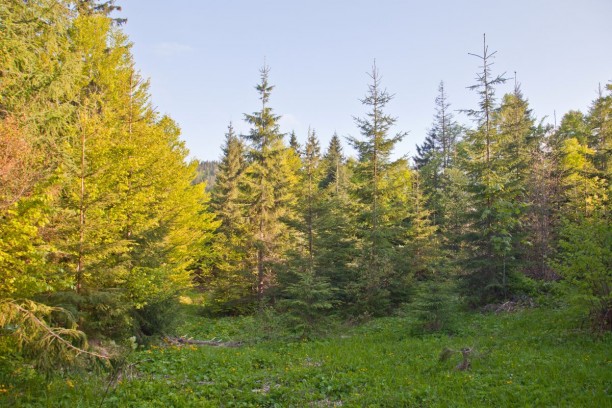
1 Killing site(s)
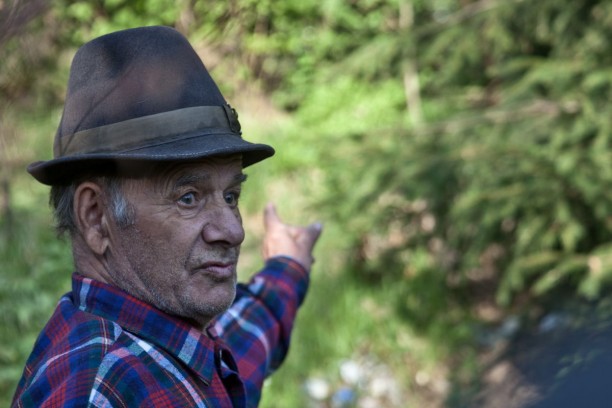
Vasyl B., born in 1927: "That day, I was grazing cows. I saw a column approaching, and I was curious to see what it was. In that column there were at least twenty Jews. When they were brought in front of the pit, they were forced to climb onto a plank laid across it. I saw them climbing onto that plank. It was about sixty centimeters wide and very thick, maybe five centimeters or more, because it did not sway when they walked on it. It was placed across the entire pit, from one side to the other. The Jews climbed onto the plank and were shot with rifles. There were seven killers positioned around the pit. They were not only Hungarians, there were also Germans among them. The Germans were superior to the Hungarians and were the ones in command. The Hungarians obeyed. They were all killers, and each of them took turns firing." (Testimony N°YIU1496, interviewed in Lopushne, on May 18, 2012)
The Transcarpathian region was incorporated into Czechoslovakia and subsequently occupied by Hungarian forces, who retained control from 1939 to 1945.
Part of Poland until 1939, the neighboring Ivano-Frankivsk region was annexed by the Soviet Union in September of that year. From July 1941 to July 1944, the region was under German occupation as part of Distrikt Galizien within the General Government.
Even before 1939, the border between Czechoslovakia and Poland ran through the Carpathians, with border posts established at several locations, including the Torun Pass. Thus, both before and during World War II, the Torun Pass played an important role in the Carpathians.
When World War II broke out, the border between what would become the German-occupied zone and the Hungarian-controlled zone was maintained, becoming a critical dividing line in the region. Local geography shaped the movements of Jewish populations: according to witnesses interviewed on both sides of the border, smugglers operated in the area, guiding Jews from the German-occupied side toward the Hungarian zone, which was initially perceived as relatively safer. Following Germany’s invasion of Hungary in March 1944, a puppet government was put in place, and it played a role in the Holocaust.
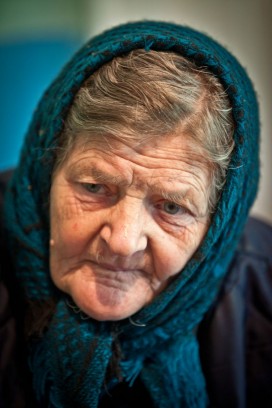
Historical sources show that in spring and early summer 1944, Hungarian Jews were confined to ghettos in Transcarpathia and deported to Auschwitz. Testimonies collected by Yahad–In Unum further indicate that from summer through winter, Jews from Torun and surrounding area, including those who had initially gone into hiding, were gradually captured and marched toward the German-occupied border via the Torun Pass. Witnesses Gafia T. and Dmytro B. reported seeing these columns and stated that some Jews were shot at the Torun Pass near the Hungarian border guard barracks, while others were killed inside the German-occupied zone, particularly in Vyshkiv.
Vasyl B. (born 1927), interviewed in Lopushne, recalled witnessing one such killing while tending cows near the border. He described how four German soldiers brought a group of about twenty Jews to pre-dug pits roughly ten meters long and four to five meters wide not far from the border guard barracks. The victims were forced onto a plank above the pit in small groups and shot at close range, with bullets passing through several people at once. When bodies fell into the pit, other Jews were compelled to descend and arrange them "like matches in a box" before being brought back up and killed in turn. Once the pit was filled, the remaining Jews were forced to cover it. Vasyl B. noted that, while Germans gave the orders, Hungarian soldiers carried them out. Women considered attractive were separated, stripped near the pit, raped by German and Hungarian soldiers, and then killed like the others.
As for today, there is no memorial at the killing site to commemorate the victims.
For more information about the killings of Jews in Lopushne and Vyshkiv, please follow the corresponding profiles.
Do you have additional information regarding a village that you would like to share with Yahad ?
Please contact us at contact@yahadinunum.org
or by calling Yahad – In Unum at +33 (0) 1 53 20 13 17