




1 Killing site(s)
Olexandra Sh., born in 1924:
"YIU: In the column you saw in Odesa, were there any people you knew from your apartment building?
Witness: No, they weren’t in that column. I think they were taken from our building two or three days later. The Jewish family I worked for left, and I left too because the door had been sealed. They were evacuated, but those who couldn’t leave were taken away with the column. […] When I came back about a week later, they were already in our village club. They had been locked inside the club and in the sheds nearby. I know this because some Jews from our building were there. I went to see them and spoke with them. […] The club was so crowded people were packed like sardines. They suffered terribly. They were treated very badly. They were, pardon me, covered in lice. […] Local people went inside the club. I went in myself to see the Jews I knew from Odesa. Among them was a seamstress named Rosa.
YIU: Did Rosa stay in the club for a long time?
Witness: I don’t know exactly how long they stayed, maybe around two weeks. Then they were taken away to be burned.
YIU: Were they taken away in the morning or in the evening?
Witness: Late in the afternoon. The Romanians led them away. We didn’t know where they were taking them. Then we heard gunshots. There were screams and a lot of noise. Someone said the Jews were being executed. Soon after that, we saw the flames." (Testimony N°YIU1270U, interviewed in Marianivka, on August 2, 2011)
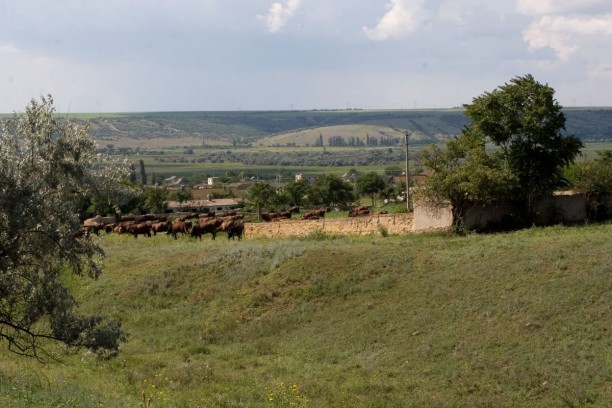
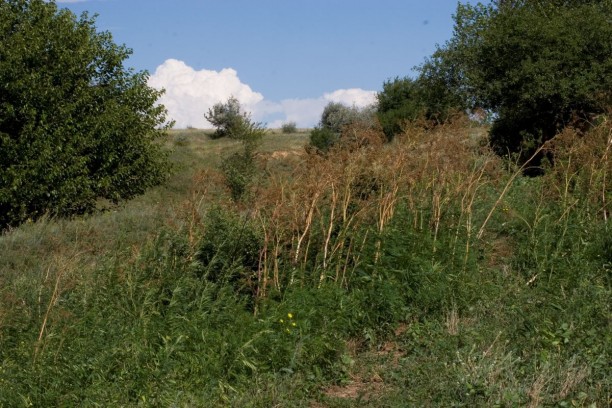
"On March 10, 1942, Soviet civilians displaced from Western Ukraine and Odesa were executed. The mass shooting took place outside the village, approximately 500 meters east of the Menzhinsky kolkhoz orchard, in a natural hollow where the victims were thrown into a lime pit. Prior to the execution, they were forced to undress completely.
The perpetrators were a group of 17 German colonists who arrived from Tartakai under the command of a German officer. The victims were shot in groups of approximately 100 using rifles. In total, nearly 800 people were killed.
Following the executions, the bodies, including some victims who were still wounded, were doused with gasoline and burned. The victims included infants, women, and elderly persons; among them were approximately 470 children.
The identity of the officer who commanded the execution has not been established." [Act N°11 drawn by State Extraordinary Soviet Commission (ChGK), on October 10, 1944, in the village of Marianovka, Berezovka district; Copy USHMM RG.22-002M, Reel 6 (29), p.31]
Marianivka, located in the Berezivka district of Odesa Oblast, lies approximately 85 km (53 mi) northeast of Odesa. In the nineteenth century, the area formed part of the Kherson Governorate of the Russian Empire and was included in the zone of Jewish agricultural colonization established by the tsarist authorities. The Berezivka district was also characterized by a significant presence of ethnic German settlers (Volksdeutsche).
Following the Revolution, the region became part of the Ukrainian Soviet Socialist Republic. Although several Jewish agricultural colonies existed in the wider Berezivka area, available census data indicate that Marianivka itself did not have a Jewish population prior to the Second World War.
Marianivka was occupied by German forces in early August 1941 and was subsequently transferred to Romanian civilian administration as part of the Transnistria Governorate.
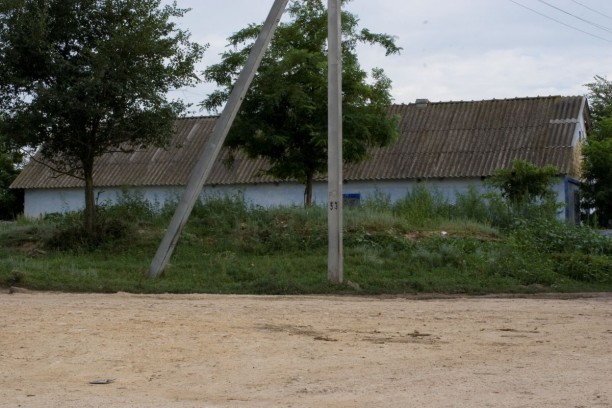
In February 1942, more than 800 Jews, including women, children, and elderly people, were brought to Marianivka. They had been deported from Odesa and, according to archival sources, also from Western Ukraine. Upon arrival, the deportees were placed under Romanian guard and confined in at least three detention sites: the kolkhoz grain warehouse, the village club, and a large multi-purpose building that has since been converted into a private residence.
Local inhabitants occasionally attempted to provide food to the detainees. Olexandra Sh., born in 1924, recalled visiting the club to see a Jewish seamstress named Rosa, whom she had known in Odesa. Rosa was sometimes permitted to leave during the day to sew clothing for villagers in exchange for food. Harsh detention conditions, hunger, and disease led to the deaths of a number of prisoners. According to Mykolai K., born in 1931, those who died were buried in an anti-tank ditch near the kolkhoz orchard.
After one to two weeks of confinement, the remaining detainees were murdered during an Aktion carried out on March 10, 1942. The massacre was perpetrated by German colonists (Volksdeutsche) from Tartakai under the supervision of a German officer, with the assistance of Romanian guards.
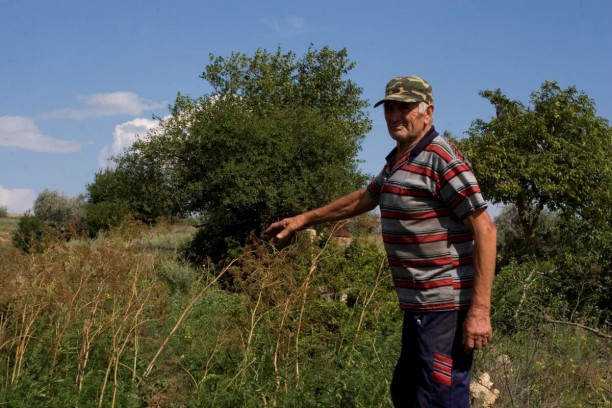
The victims were marched in groups to the outskirts of Marianivka. Near the orchard of the Menzhinsky kolkhoz, they were forced to undress to their underwear and then escorted several hundred meters further to the killing site. There, they were positioned at the edge of the pre-existing lime pit and shot in the back of the neck. Victims who did not fall directly into the pit were pushed inside by two Jewish prisoners forced to carry out this task.
After the shooting, the bodies, including those of victims who were still wounded, were doused with gasoline and burned in an attempt to conceal the crime. Approximately 800 Jews were murdered during the Aktion, including an estimated 470 children. To date, no memorial marks the killing site.
It is known that at least one person survived. A 17-year-old Jewish girl reportedly escaped from the lime pit through an opening connected to a heating flue. She was sheltered by the aunt of Pavel P., born in 1932, who hid her in her home in the nearby village of Viktorivka.
Do you have additional information regarding a village that you would like to share with Yahad ?
Please contact us at contact@yahadinunum.org
or by calling Yahad – In Unum at +33 (0) 1 53 20 13 17