


1 Killing site(s)
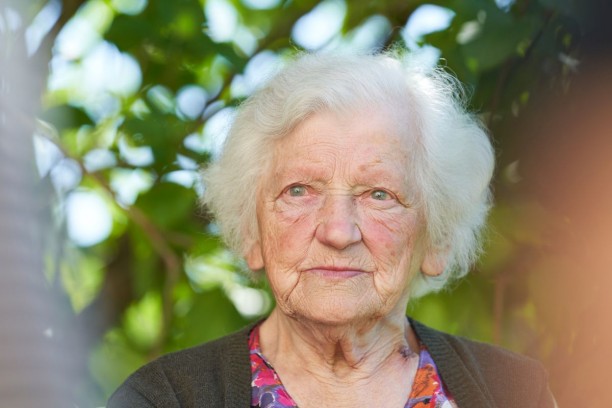
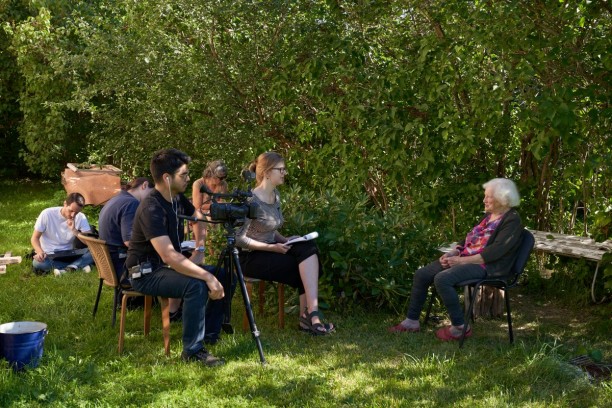
Rasma O., born in 1932: "Under German rule, my classmate Yczok Garevitch was forced to wear a yellow star on both his chest and his back. On his way to school, he appeared deeply sad and walked with heavy steps, uncertain of what the next day might bring. Dorota Rose, who attended morning prayers with me at school, was also required to wear a yellow star. Morning prayers, led by a priest, were mandatory, and at their conclusion we were required to sing the Nazi anthem. One day, Yczok stopped coming to school; he was simply gone. Dorota disappeared the same day. Both were shot in a forest near Rūjiena." (Testimony N°YIU127LV, interviewed in Rūjiena, on August 13, 2022)
"[…] With the arrival of the German fascist occupiers in our town, the German executioners, with the assistance of their Latvian-German nationalist accomplices, arrested 37 people, including elderly individuals, women, and children. These arrests of civilians of our town took place in July and August 1941. In August of the same year, 20 civilians, including women and children, were taken by truck outside the town and, after being subjected to abuse, were shot by the fascists. The remaining 17 civilians were taken out of the town and shot on the territory of Rencēni Parish, approximately 15 kilometers from the town of Rūjiena, as well as near the settlement of Oleri, about 12 kilometers from Rūjiena. Before being shot, the innocent victims were subjected to forced labor and exploited until they were completely exhausted. Prior to the execution, they were subjected to abuse, torture, and humiliation. We hold the German occupying authorities, as well as their collaborators, responsible for the abuse and murder of civilians […]." [Act taken by State Extraordinary Soviet Commission (ChGK), on April 15, 1945; GARF 7021-93-103, p.203/Copy USHMM RG.22-002M]
Rūjiena is situated approximately 152 km (94.4 mi) northeast of Riga. The Jewish community of the town was first documented in written sources in 1920; however, Jewish residents were present earlier, as the Shmulyan family and their eleven children were living there as early as 1858. During the 1920s and 1930s, the Jewish population of Rūjiena varied between 60 and 70 people. According to the 1935 census, the town had 62 Jewish residents, comprising 1.4% of the total population.
Rūjiena had a synagogue that was rebuilt in 1939, as well as two Jewish cemeteries, one of which—the older cemetery—was situated in the town center. Most members of the Jewish community earned their living through trade and skilled crafts, owning about 5% of local shops, including businesses selling textiles, ready-made clothing, hats, footwear, and tin goods. Bertha Blum worked in the town as a dentist.
In 1940, Latvia’s incorporation into the Soviet Union profoundly altered life for local residents, as private enterprises were nationalized and many community institutions were shut down. On June 14, 1941, Sholom Schmidt and his family were deported to Siberia. Following the launch of Operation Barbarossa, the Nairis family and Leo Roze succeeded in evacuating to inland regions of the Soviet Union, while the majority of the town’s Jewish population remained in Rūjiena.
Rūjiena was occupied by German troops on July 9, 1941. Immediately afterward, anti-Jewish measures were introduced, including the mandatory wearing of identifying yellow stars and a ban on contact with the non-Jewish population. Jewish men considered capable of work were arrested, held at the police station, and forced to perform a range of labor tasks.
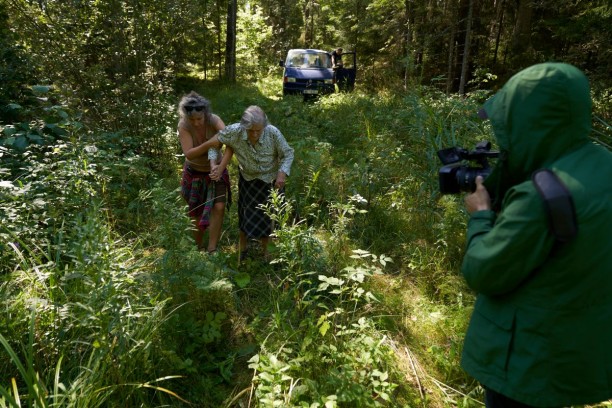
On July 14, 1941, approximately 15 Jews, along with some Soviet activists, were taken to a site near Oleri, about 11 kilometers from Rūjiena. There, at the roadside on the edge of the forest, they were shot and buried by members of the Self-Defense squad.
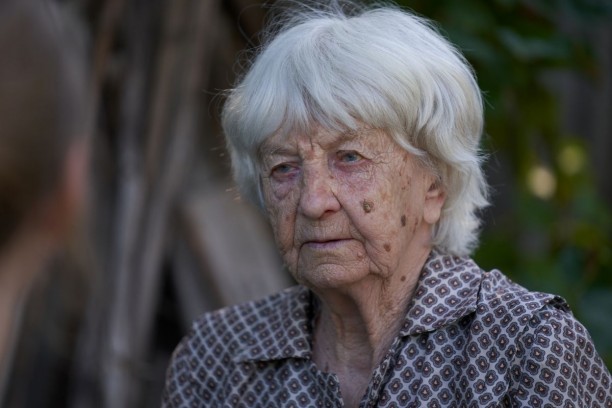
In September 1941, the remaining Jews of Rūjiena, including women and children, were confined in the synagogue, where they were held for several days before being taken to the Bodnieki Forest in Naukšēni Parish and shot. Although Soviet archival records date this Aktion to August 1941, other available sources, including the testimony of Ilga C., born in 1935, a local resident interviewed by Yahad-In Unum, indicate that it took place in late September. Ilga C. recalled seeing two trucks carrying approximately 20 Jews (18 according to other sources), escorted by armed guards, both Germans and Latvians, driving toward the forest. Shortly afterward, she heard gunshots coming from the direction of the killing site. Several days later, when she went to the pit to place flowers, she observed that it was about 10 meters long and 2 meters wide.
It is estimated that the total number of Jews from Rūjiena murdered during the Second World War does not exceed 50 individuals. In the 1960s, their remains, along with those of other victims, were exhumed from different killing sites, including the one in the Bodnieki Forest, and reburied at Bērtuļa Cemetery in Rūjiena. A monument erected at the site is dedicated to the Soviet activists killed in 1941 by the German fascists. The monument bears the names of eleven victims, among them Gershon Gurevich, Isaac Yankelovich, Leib Weinstein, Yisrael Rebruch, and Garry Rebruch.
Do you have additional information regarding a village that you would like to share with Yahad ?
Please contact us at contact@yahadinunum.org
or by calling Yahad – In Unum at +33 (0) 1 53 20 13 17