


1 Killing site(s)
Maria P., born in 1925 : "The Jews lived in the center of town, and that is where they rounded them up before leading them to the ravine to be shot. Later, after the mass shooting, I saw a young Romanian soldier named Vasilica leading Rosa Israelivna away. She was a Jewish woman in her 40s or 50s, a very good doctor. Her husband was a local ethnic German—a Volksdeutsche—and a respected man because he ran the hospital. He had protected his wife as best he could, hiding her for a long time. But one day he had to leave, and Vasilica took advantage of the situation to drag his defenseless wife out. He paraded her through the center of town, along Lenin Street, so that everyone could see she had not been spared. He led her to a small ravine near the pond and shot her with a pistol… She fell. That evening, I went swimming in the pond with other children. When we saw her, I shouted, ’Rosa Israelivna! Get up!’, but she was dead, and birds were pecking at her flesh." (Testimony N°YIU1246U, interviewed in Shyriaieve, on July 25, 2011)
" 1— PREPARATIONS FOR THE EXECUTION
At the request of the SS Kommandantur in Tsebrikovo, over the course of a month and a half—from August to September 23—the Shyriaievo police conducted a population census in Shyriaievo and compiled detailed lists. People who had been registered were strictly forbidden from leaving the village or staying away from their homes.
On the morning of September 24, the commander of the Tsebrikovo SS Kommandantur, Weingartner, arrived in Shyriaievo accompanied by a group of 12 SS men. They immediately went out into the fields to select an execution site.
2— THE ARRESTS
At that point, the registered individuals were ordered to report to the police station to register. Everyone who showed up was immediately arrested; anyone who did not show up was arrested at home or wherever they were found.
3— TRANSPORTATION TO THE EXECUTION SITE
First, the men were transported to the execution site in a three-ton truck. They were followed by the women, children, and infirm, who were brought in two trucks.
4— LOCATION, TIME, AND CONDITIONS OF THE EXECUTION
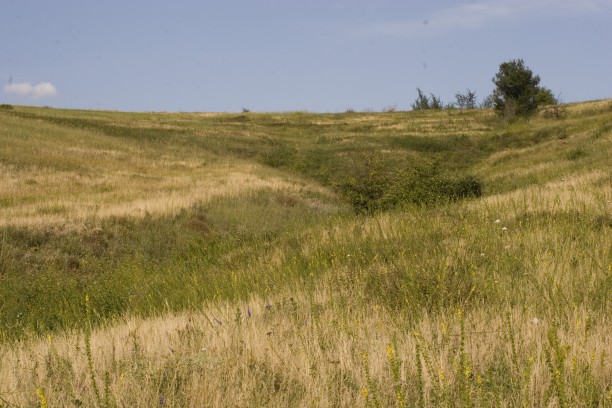
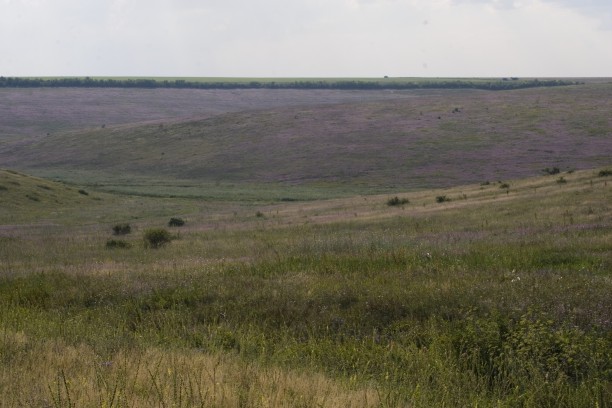
The execution took place in a small valley 4 km east of Shyriaievo and 500 m south of the road from Shyriaievo to Starye Mayaki, on September 24, 1941, between 4:00 and 6:00 p.m.
The execution was carried out in groups of 10 using a light machine gun and submachine guns. Adults were forced to kneel at the edge of the ravine, while children stood upright facing the ravine so that everyone’s head was at the same level. After the first 10 people were executed, the next group of 10 were lined up and shot in the same manner, followed by the third, and so on.
Everyone who were shot fell into the ravine. The wounded were finished off at the bottom with revolvers and submachine guns.
The bodies were covered with a thin layer of earth, causing some of them to be exposed as rain washed the soil away. […]
Based on written and oral testimonies from the residents of Shyriaievo, as well as exhumations […] it was established that on that day, 87 innocent Soviet civilians living in Shyriaievo and 21 civilians from other villages—a total of 108 people—were shot. […]" [Act n° 1 drawn by State Extraordinary Soviet Commission (ChGK), on October 15, 1944, pp.20-21; GARF 7021-6-84/Copy USHMM RG.22-002M]
Shyriaieve is a rural settlement located in the Berezivka district of the Odesa Region, Ukraine. It lies approximately 125 km (78 mi) north-northwest of Odesa and roughly 81 km (50 mi) west of Berezivka. First documented around 1795 under the name Stepanivka, the settlement was formally renamed Shyriaievo in the mid-19th century. From 1935 to 2020, Shyriaieve served as the administrative center of the district.
Although not a classic large shtetl, it hosted a settled Jewish population alongside ethnic Ukrainians and Russians. Statistical records from 1880 indicate that 20% of the town’s population was Jewish. By the 1939 Soviet Census, the Jewish population of the Shyriaieve District constituted a small minority (estimated between 300 and 500 individuals across the district), with around 100 to 150 local Jewish residents living in the settlement of Shyriaieve itself prior to World War II. For instance, Iraida P., born in 1925, recalls "a Jewish street near the bridge, so called because it was inhabited exclusively by Jewish residents." As recalled by Tetiana Z., born in 1927, relations between the Ukrainian and Jewish populations were harmonious, with local children attending school alongside one another. According to village residents interviewed by Yahad - In Unum, local Jews were most commonly merchants, business owners, craftsmen, or members of the intelligentsia. Witnesses specifically remember the photographer Nikolski with his son, and his sister Betia, who ran a café, as well as a female doctor named Rosa Israelivna.
Shyriaieve was occupied by German forces in the summer of 1941 and was soon transferred to Romanian administration. According to archival data, on the morning of September 24, 1941, the Jewish population was ordered to report to the local police station. Everyone who showed up was immediately arrested, while anyone who did not appear was arrested at home or wherever they were found.
Iraida P., born in 1925 and interviewed by Yahad, recalled that Romanian soldiers went from house to house, capturing Jews who tried to flee. Once assembled, the Jews were led toward the ravine known as Yakymiv Yar, located behind the kolkhoz (collective farm) in the direction of Stari Mayaky. Transportation was carried out in trucks. Men were the first driven to the killing site, followed by women, children, and the infirm. When they arrived at the site, the victims were forced to kneel at the edge of the ravine in groups of ten and shot with machine guns.
Some Jews who had managed to escape during the roundup were reportedly caught and killed directly in the streets, as appears to have been the case for the son of the Jewish photographer, Nikolsky. Iraida P. remembered: "Two Romanians chased this little boy down the neighboring street, and right there he was caught and killed."
According to Soviet archives, at least 108 Jews, including 87 residents of Shyriaieve and 21 Jews from surrounding villages, were shot on the afternoon of September 24, 1941, though local witnesses estimate the figure closer to 120.
According to testimonies from local residents, isolated killings continued after the mass shooting. Among the victims was a Jewish female physician, Roza Israyelovna, who was shot by a Romanian gendarme named Vasilica in the aftermath of the massacre.
As of today, no memorial has been erected at the killing site in the Yakymiv Yar ravine to commemorate the victims.
Do you have additional information regarding a village that you would like to share with Yahad ?
Please contact us at contact@yahadinunum.org
or by calling Yahad – In Unum at +33 (0) 1 53 20 13 17