

1 Killing site(s)
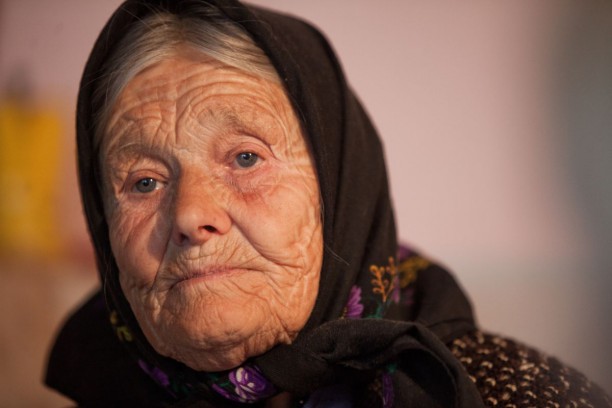
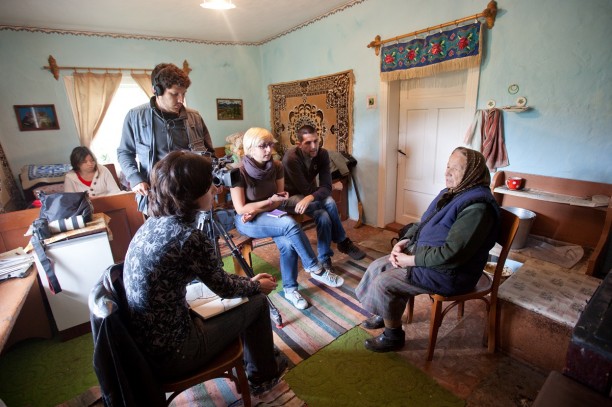
Gafia G., born in 1930: "After the arrival of the Hungarians, the Jews continued to live relatively normal lives for quite some time, perhaps several years. Then, one night, they were told that they would be relocated elsewhere. I believe it was in the autumn, as the rutabagas had already been harvested. Hungarian soldiers wearing feathered hats went from house to house, instructing the Jews to prepare; they already knew which houses were Jewish. Those who owned carts took everything they could, including pillows and mattresses, while those without carts carried their belongings in their arms. Most of the Jews were taken away at night. As there was not enough time to gather everyone, those who remained were taken away during the day. Some were killed in Torun itself; others were taken toward the border and killed there." (Testimony N°YIU1493, interviewed in Torun, on May 18, 2012)
"[…] I remember a Magyar [Hungarian] officer named Gergel, a senior lieutenant, who was commander of the Volove [today Mizhiria] district from 1941-1942. […]
I know of incidents when he rounded up Jews in villages and sent them to the village of Torun. There, in a forest near Torun, he shot them. […]" [Interrogation report of Abram Londava, born in 1914; taken by the State Extraordinary Soviet Commission (ChGK), at Volovoie on March 27, 1946; GARF 7021-62-7 p. 198/Copy USHMM RG.22-002M]
Torun is a village located in the Transcarpathian region of present-day Ukraine, not far from Khust. The earliest known written reference to the village dates to 1635. Prior to 1918, Torun was part of the Austro-Hungarian Empire. Following the empire’s collapse in 1918, the region of Transcarpathia experienced a period of political instability: it was initially claimed by the West Ukrainian People’s Republic before being incorporated into Czechoslovakia between 1919 and 1938. In March 1939, Torun briefly became part of the newly proclaimed independent Carpathian Ukraine, but was shortly thereafter occupied by Hungarian forces, who retained control of the area from 1939 to 1945.
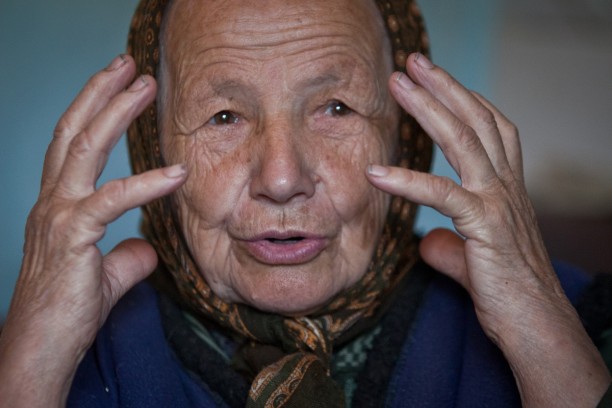
No available archival or documentary sources have been identified that provide detailed information about the Jewish community or its religious institutions in Torun during the pre-war period. Nevertheless, several eyewitnesses interviewed by Yahad – In Unum independently recalled the presence of a Jewish community in the village prior to the Second World War. According to the testimonies of Gafia T. (born 1931) and Gafia G. (born 1930), the Jewish community of Torun was relatively large and economically active in the interwar period. Both witnesses recalled that Jewish residents owned the village’s shops and played a central role in local trade. They further stated that Jewish families employed Ukrainian residents to work their agricultural land and to perform labor in the surrounding forests. In return for their labor, Jewish landowners allocated plots of land to Ukrainian workers for cultivation. Additional testimony provided by Eva G. (born 1929) confirms the presence of Jewish-owned hospitality businesses; she recalled an inn in Torun that was owned and operated by a Jewish family. Gafia T. further noted that some Jewish residents were employed in the local administration, indicating a degree of integration into village life.
All witnesses emphasized the religious character of the Jewish community and confirmed the existence of a synagogue in the village. Gafia T. recalled that Jewish residents observed kosher dietary laws, refrained from work on Saturdays, and regularly attended prayers at the synagogue, which she also described as functioning as a house of prayer. Gafia G. added that the Jewish community had established a public bath, believed locally to possess healing properties, and she also recalled distinctive elements of Jewish dress.
According to the recollections of all witnesses interviewed by Yahad – In Unum, there was no evacuation or organized departure of Jews from Torun prior to the outbreak of the Second World War, and the Jewish population remained in the village at the time of the Hungarian occupation.
From 1939, Torun, located in the Transcarpathian region of present-day Ukraine, was under Hungarian occupation and situated close to the German occupation zone in the neighboring Ivano-Frankivsk region. Following Germany’s invasion of Hungary in March 1944, a puppet government was put in place, and it played a role in the Holocaust.
Historical sources indicate that tens of thousands of Hungarian Jews were concentrated in several ghettos across Transcarpathia before being deported to Auschwitz in the spring and early summer of 1944. In addition, according to local witnesses interviewed by Yahad–In Unum, during different periods toward the end of the war, ranging from summer through autumn and winter, numerous Jews from Torun and the Mizhhiria district, including those who had gone into hiding after the initial deportations and shootings, were progressively captured and escorted in columns toward the German occupation border via the Torun Pass, where a border guard post was located. They were then either shot in the mountainous area at the Torun Pass, or deported further onward, for example to Vyshkiv.
According to testimonies collected by Yahad-In Unum, the local Jewish population was arrested and removed in several waves over a relatively extended period. These arrests appear to have taken place relatively late, likely several years after the beginning of the war. Although the exact dates of these deportations cannot be determined precisely, they most likely began in 1944; however, some testimonies suggest that the first killings and deportations of Jews started as early as 1942.
As reported by Anna B. (born 1927), and Dmytro B., (born 1927), Jews from Torun and neighboring areas, approximately 600 people in all, were first assembled for three days in the synagogue located in the center of the village. After this period, they were taken away on foot at night under armed Hungarian guard. This information is corroborated by Faia’s recollections, a Jewish survivor from the nearby village of Lopushne: the Jewish population of Lopushne, including herself and her family, was taken to Torun and confined in the synagogue, from where they were deported via Ivano-Frankivsk to Transnistria, in the direction of Odessa. At least some of the Jews were likely shot en route, either at the Torun Pass or in Vyshkiv.
According to the testimony of Gafia T., at the end of the war, small groups of Jews, ranging from five to over twenty individuals who had been caught in hiding, were marched through Torun, while some local Jews were taken directly from their homes. On one occasion, Gafia T. witnessed an elderly Jewish man who declared that he preferred to be killed in the village rather than continue toward the mountains; he was beaten to death with rifle butts, and the remaining Jews were forced to carry his body to the border, where they were shot.
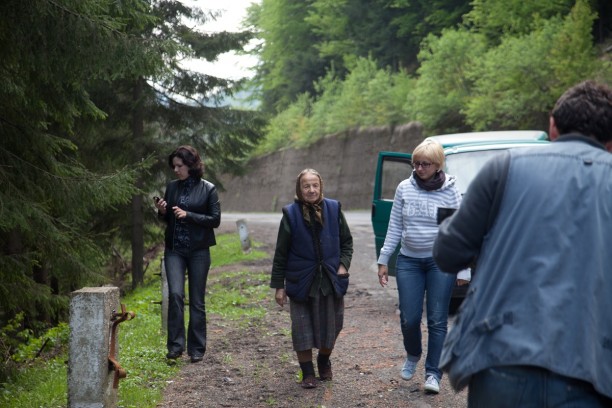
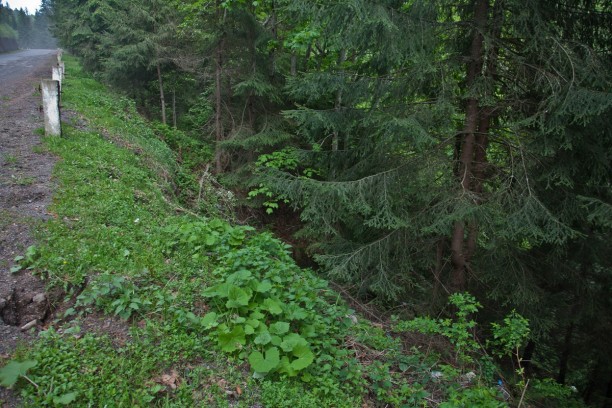
In her testimony, Gafia T. states that some local Jews were shot in Torun itself, in a wooded area at the outskirts of the village. Available historical sources also estimate that in July 1944, approximately 40 Jews from Torun and Maidan were shot by Hungarian Gendarmes. With the assistance of local witnesses, Yahad-In Unum team identified the pit in a ravine situated in a wooded area north of the village. According to the witnesses’ accounts, the Jews were forced to dig a large pit, across which a wooden plank was placed. The victims were then made to walk across the plank and were shot. Several witnesses recalled that human remains remained visible for years after the shootings, uncovered by animals. To date, there is no memorial at the ravine to commemorate the victims.
Following the destruction of the Jewish population of Torun, their property was looted. According to Anna B. (born 1927), after the shootings Hungarian soldiers returned with Jewish belongings and attempted to sell them locally. She further stated that the Hungarian administration later confiscated valuable items from Jewish homes and transported them to Hungary.
For more information on the fate of Jews from Torun and Mizhhiria disctrict, please follow the corresponding profiles.
Do you have additional information regarding a village that you would like to share with Yahad ?
Please contact us at contact@yahadinunum.org
or by calling Yahad – In Unum at +33 (0) 1 53 20 13 17